

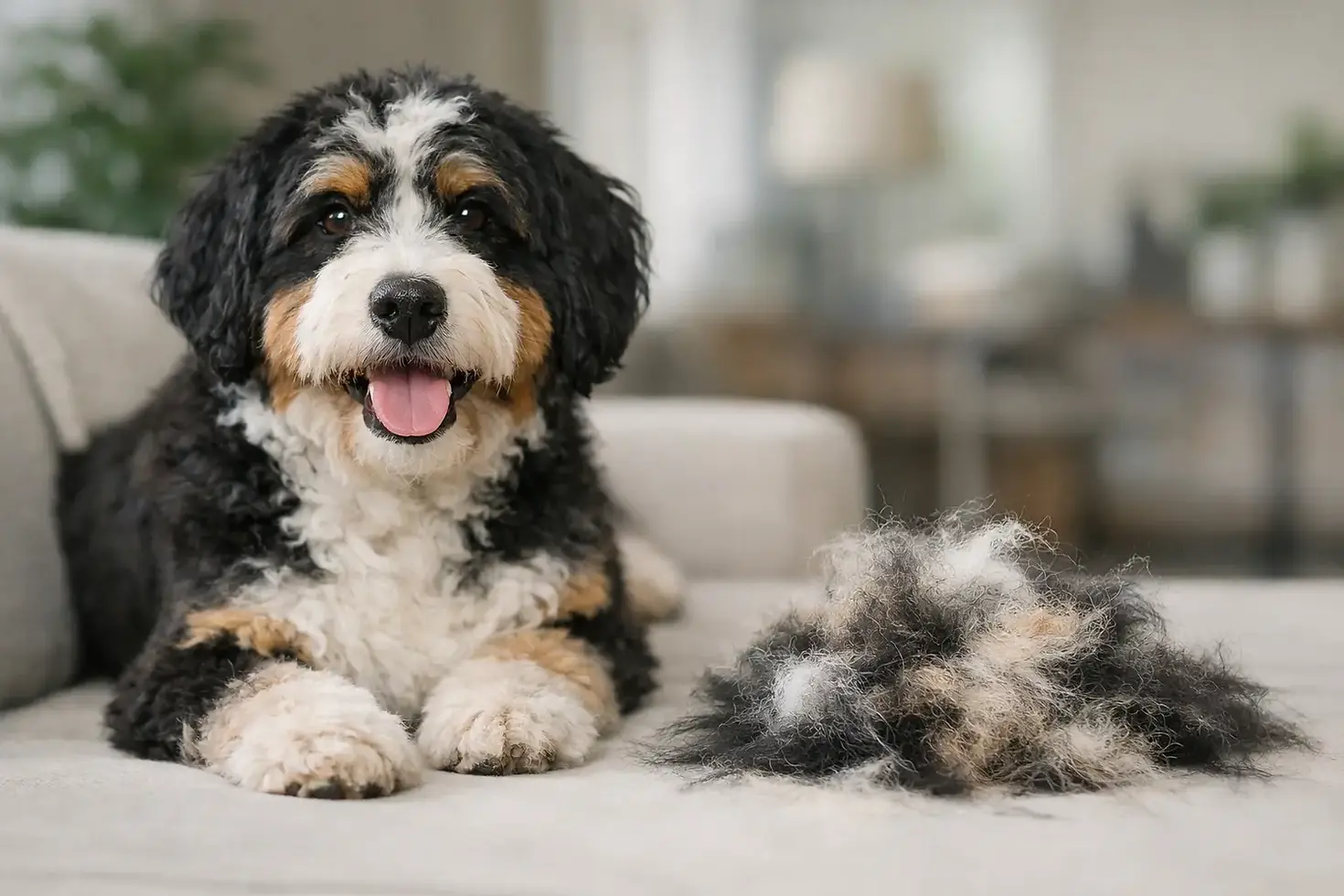
Do Bernedoodles Shed a Lot?

You notice the fluffy teddy bear face first. Then the practical question hits right after - do bernedoodles shed a lot, and what will that actually look like on your couch, clothes, and floors once your puppy is home?
The honest answer is that Bernedoodles usually shed less than many traditional breeds, but not every Bernedoodle sheds the same. Coat type, generation, and grooming all matter. If your family wants a softer, lower-shedding companion for indoor living, understanding those differences before you choose your puppy can save a lot of guesswork later.
Do Bernedoodles Shed a Lot or Just a Little?
Most Bernedoodles are considered low-shedding, especially compared with a Bernese Mountain Dog. That is one reason families are so drawn to them. They love the gentle, family-friendly personality and the plush doodle look, but they also want a dog that does not leave heavy fur all over the house.
That said, low-shedding does not mean no-shedding. Some Bernedoodles drop very little loose hair. Others may shed lightly year-round or a bit more during seasonal changes. If someone promises that every Bernedoodle is completely non-shedding, that is too absolute. With doodles, genetics are still genetics.
For most homes, the better question is not whether Bernedoodles shed at all. It is whether the puppy you choose is likely to have a coat that fits your lifestyle, allergy concerns, and grooming routine.
Why Some Bernedoodles Shed More Than Others
The biggest factor is coat type. Bernedoodles can have straight, wavy, or curly coats, and each behaves differently.
Straight coats
A straighter coat usually looks more like the Bernese side. These coats tend to shed more than wavy or curly coats. They can still be beautiful family dogs, but they are often not the best fit for buyers specifically looking for a low-shedding companion.
Wavy coats
Wavy coats are often the sweet spot for many families. They keep that soft, shaggy doodle appearance and usually shed lightly. Many people love this coat because it balances the doodle look with easier daily maintenance than a very tight curl.
Curly coats
Curly coats usually shed the least. They are the closest to what most people picture when they say they want a more hypoallergenic doodle-type dog. The trade-off is grooming. Less loose hair on the floor often means more coat care appointments and more brushing at home.
Generation Matters Too
If you are comparing puppies, generation can make a real difference in shedding expectations.
An F1 Bernedoodle is a first-generation cross between a Bernese Mountain Dog and a Poodle. These puppies can vary more widely in coat type. Some are quite low-shedding, while others may shed more than buyers expected.
An F1b Bernedoodle is created by breeding an F1 Bernedoodle back to a Poodle. This usually increases the chance of a curlier, lower-shedding coat. That is a big reason so many allergy-conscious and indoor-living families prefer F1b Mini Bernedoodles in particular.
A standard Bernedoodle can also be lower-shedding, but size does play into how much hair you notice. Even if a larger dog sheds lightly, there is simply more dog and more coat involved. A mini often feels easier to manage in tighter spaces, on furniture, and during grooming.
Are Bernedoodles Hypoallergenic?
This is where careful wording matters. No dog is truly 100 percent hypoallergenic. People react to dander, saliva, and skin proteins, not just visible hair. So even a low-shedding Bernedoodle may still trigger allergies in some individuals.
What Bernedoodles often offer is a better fit for many allergy-sensitive homes because they tend to release less loose hair and dander into the environment than heavy-shedding breeds. For some families, that is enough to make life much easier. For others with stronger allergies, it still depends on the dog and the person.
If allergies are a serious concern in your home, it helps to focus on lower-shedding generations and coat types rather than relying on the word hypoallergenic alone.
What Shedding Looks Like in Real Life
A low-shedding Bernedoodle does not usually leave piles of fur in every corner. Instead, much of the loose hair gets trapped in the coat and comes out during brushing or grooming. That sounds great, and often it is, but it comes with responsibility.
If the coat is not maintained, trapped hair can lead to tangles and mats. So the trade-off is simple. Less hair on your floor often means more coat care on your calendar.
For busy families, that is still a worthwhile exchange. A regular brushing routine and scheduled grooming are often far easier to live with than constant vacuuming and lint rolling from a heavy-shedding breed.
How to Keep Shedding Under Control
Even if your Bernedoodle is low-shedding, coat care still matters. Good grooming does not change your dog’s genetics, but it does make shedding more manageable and keeps the coat healthier.
Brushing several times a week helps remove loose hair before it tangles. Professional grooming every several weeks helps keep the coat clean, trimmed, and easier to maintain. Bathing should be done thoughtfully, not excessively, because overbathing can dry the skin and create its own problems.
Nutrition matters too. A healthy coat starts from the inside. Dogs with poor diets, skin irritation, or untreated sensitivities may shed more than expected, even if they are from a lower-shedding line.
Is a Bernedoodle a Good Choice for a Clean Home?
For many families, yes. If your goal is a companion dog that is easier on the home than a traditional shedding breed, a Bernedoodle is often a very appealing option. They are especially popular with families who want a dog indoors, around children, on the sofa, and woven into everyday life without feeling like the entire house turns into a fur zone.
Still, expectations matter. A Bernedoodle is not a wash-and-wear stuffed animal. This is a real dog with a real coat that needs upkeep. If you want the benefits of a lower-shedding breed, you need to be ready for brushing, grooming appointments, and coat maintenance.
For most buyers, that is a fair trade. The soft coat, family-friendly nature, and reduced shedding are a big part of what make Bernedoodles such loved companions.
Do Bernedoodles Shed a Lot Compared With Other Doodles?
Compared with some other doodle mixes, Bernedoodles often fall into a similar low-shedding range, but there is still variation. A curlier Goldendoodle, Sheepadoodle, or Bernedoodle may all shed very little. A straighter-coated version of any of those mixes may shed more.
The Bernese influence can bring a gorgeous look and sweet personality, but it can also make coat outcomes less predictable in some pairings than buyers realize. That is why breeder guidance matters so much. Families do best when they are matched not just by color or size, but by coat expectations and daily lifestyle.
What to Ask Before Choosing Your Puppy
If shedding is one of your top concerns, ask direct questions. What coat type does this puppy appear to have? What generation is the litter? Are the parents health tested? What kind of grooming routine should you expect? A trustworthy breeder should be comfortable answering all of that clearly.
This is especially important for first-time doodle owners. Many people hear low-shedding and assume maintenance-free. Those are not the same thing. A well-matched puppy should fit both your allergy goals and your willingness to keep up with coat care.
For families looking for that easier-to-manage companion experience, lower-shedding F1b Mini Bernedoodles are often a very attractive option. At Doodles4Love, that is one reason they are so popular with homes wanting a cuddly, family-ready puppy without the heavier shedding many owners are trying to avoid.
The Bottom Line for Families
So, do bernedoodles shed a lot? Usually, no - not compared with many other breeds. But the real answer is more specific than that. Some Bernedoodles shed very little, some shed lightly, and coat type plus generation make a big difference.
If you want the best chance at a lower-shedding companion, focus on a puppy with the right genetics, the right coat, and the right breeder support. When those pieces come together, a Bernedoodle can be a wonderful fit for families who want a loving indoor dog with less mess and plenty of heart.
The best puppy is not just the cutest one in the litter. It is the one whose coat, care needs, and temperament make everyday life feel easier from the moment those paws walk through your front door.


Comments