

Five Ways Puppies Learn at Home and Beyond

A puppy who confidently walks across a new floor, settles after the doorbell rings, or trots into a crate for a treat did not simply wake up knowing what to do. Those little moments are the result of experience, repetition, and gentle guidance. Understanding the five ways puppies learn helps families build on the wonderful foundation their puppy has already started and create a calmer, more connected life together.
For a young Mini Bernedoodle, Standard Bernedoodle, or other family companion, learning happens all day long. Your puppy is absorbing information when you clip on a leash, greet a neighbor, prepare dinner, or respond to a whine at bedtime. The goal is not perfection in the first week home. It is helping your puppy learn that their new family, routines, and world are safe.
The Five Ways Puppies Learn
1. Puppies learn through association
Association is one of the earliest and most powerful ways a puppy learns. Put simply, puppies connect one thing with another. If the sound of a treat bag is followed by a tasty reward, that sound becomes exciting. If calm handling is followed by praise and a small treat, being touched around the paws, ears, and mouth can become a positive experience.
This is why positive introductions matter so much. A crate should predict rest, a chew, and safety rather than isolation or punishment. A car ride can predict a cozy blanket and a calm destination. A vacuum cleaner at a comfortable distance can predict treats instead of panic.
Keep these sessions short and easy. If your puppy freezes, pulls away, refuses treats, or becomes overly worried, the experience may be too intense. Create more distance, lower the volume, shorten the session, or try again another day. Confidence grows when puppies have successful experiences, not when they are pushed through fear.
2. Puppies learn through consequences
Every behavior has a result, and puppies quickly notice which choices work for them. When sitting politely earns attention, treats, or a chance to go outside, sitting is likely to happen more often. When jumping makes people step away and greeting calmly brings people closer, your puppy begins to understand the difference.
This does not mean training needs to feel strict or harsh. In fact, punishment can create confusion or make a sensitive puppy worried about you. The most effective approach is to catch the behavior you want and reward it right away. A cheerful “yes,” a tiny treat, a favorite toy, or access to something your puppy wants can all be meaningful rewards.
Timing is the key. Reward your puppy while all four paws are on the floor, not several seconds later after they have started jumping. Praise them when they potty outside, not once they are back in the kitchen. Puppies live in the moment, so your response needs to be clear and immediate.
3. Puppies learn through repetition and routine
A predictable routine helps a puppy understand what comes next. Meals, potty breaks, naps, crate time, play, and short training sessions all become easier when they happen in a familiar rhythm. This is especially helpful during the first few weeks in a new home, when everything else feels different.
Repetition is how a cue becomes reliable. Saying “come” once in the backyard is an introduction. Practicing it often in easy settings, then gradually around mild distractions, is how your puppy learns that coming to you is always worthwhile.
Keep practice sessions brief. Two or three minutes several times a day can be more productive than one long session that leaves a young puppy tired or frustrated. Use everyday opportunities: ask for a sit before setting down the food bowl, practice “wait” before opening the door, and reward a calm settle while you answer emails.
Consistency also means the whole household follows similar rules. If one person allows jumping on the sofa and another scolds it, your puppy receives mixed information. Decide what works for your family and make the desired behavior easy to understand.
4. Puppies learn by watching people and other dogs
Puppies are observant. They watch your body language, tone of voice, and daily habits closely. They can also learn from a calm, well-mannered adult dog. A puppy may see another dog sit quietly for a leash, settle on a bed, or walk politely through the house and begin to copy that behavior.
People provide the most important example. If greetings at the front door are loud and chaotic, your puppy may join the excitement. If you speak calmly, move slowly, and reward a polite sit before opening the door, you are showing your puppy exactly what you want.
Be thoughtful about dog-to-dog interactions. A friendly, vaccinated adult dog with good social skills can be an excellent teacher. A dog that overwhelms, bullies, or plays too roughly is not. Socialization does not mean your puppy must greet every dog or person they see. It means helping them learn to feel safe and composed around the world.
5. Puppies learn through exploration and sensory experiences
Puppies use their noses, paws, eyes, ears, and mouths to gather information. Exploring new textures, surfaces, sounds, objects, and environments can help them become adaptable companions. This is one reason thoughtful early enrichment is valuable during the breeder’s care and after a puppy joins a family.
At Doodles4Love, puppies receive early handling and age-appropriate enrichment before they go home, along with beginnings in crate and potty training. That foundation is helpful, but it is only the beginning. The transfer to your home is where your puppy learns your schedule, your sounds, and the life they will share with you.
Offer new experiences gradually. Let your puppy investigate a cardboard box, a folded umbrella, a rubber mat, or a quiet outdoor bench at their own pace. Pair unfamiliar things with treats and calm encouragement. Avoid forcing your puppy toward an object they find scary. Curiosity is the goal.
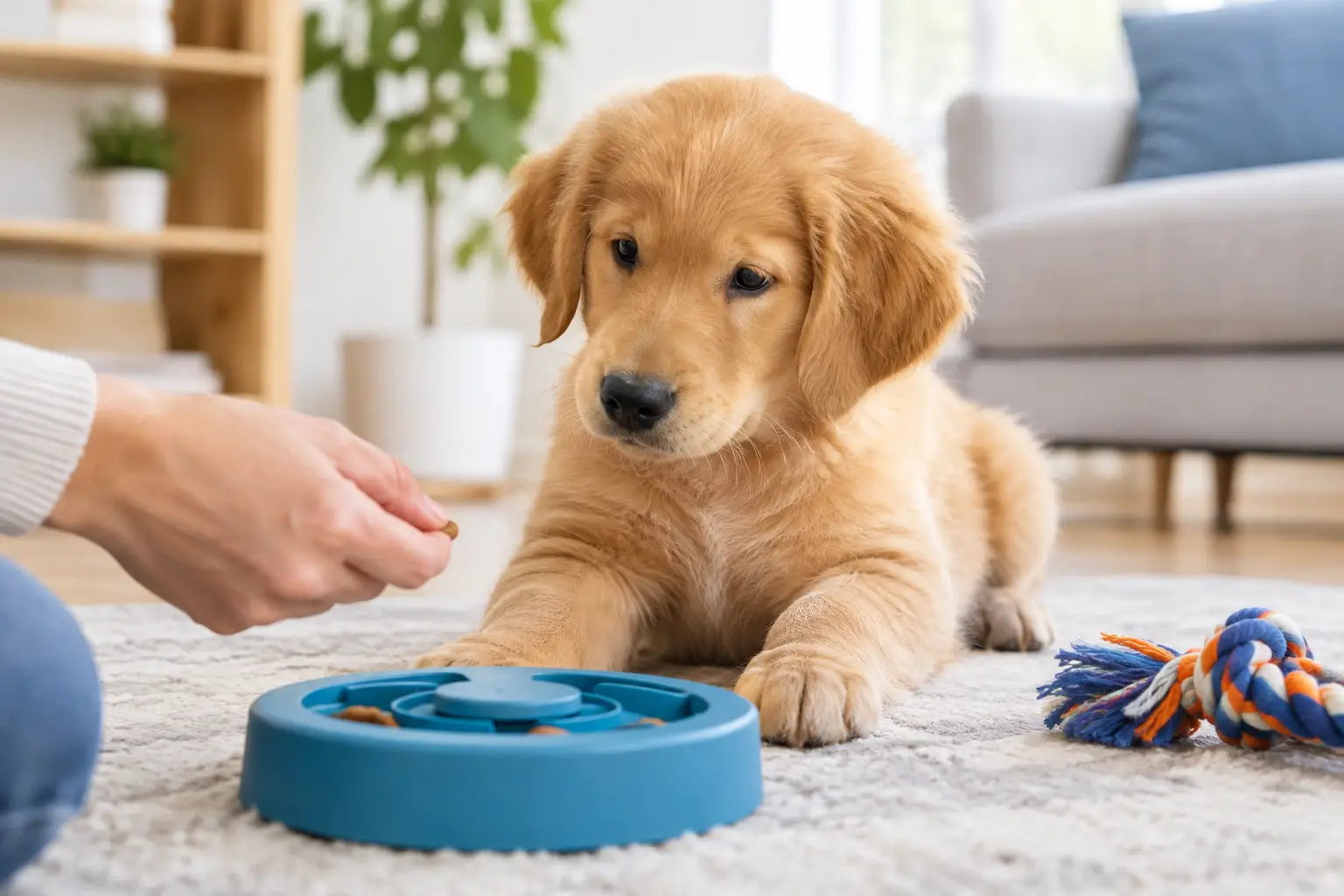
This kind of exploration is not limited to big outings. Letting your puppy sniff on a walk, work on a food puzzle, or search for a few treats in the grass uses their brain in a healthy way. Mental activity can be just as tiring as physical play, which is welcome news for busy families with a bright young doodle puppy.
How to Support Learning During the First Month Home
The first month should feel steady, not packed with pressure. Your puppy needs sleep, gentle bonding, predictable potty trips, and chances to decompress. Young puppies often become extra mouthy, wiggly, or wild when they are overtired, so regular naps are a training tool, not a missed opportunity for fun.
Start with the skills that make family life easier: responding to their name, coming when called indoors, sitting for attention, relaxing in the crate, pottying in the right place, and accepting light grooming. For doodle-coated puppies, calm brushing practice is especially worthwhile. Use a soft brush, keep the session short, and reward frequently so grooming becomes a normal part of life.
When visitors want to meet your new puppy, quality matters more than quantity. Invite calm people, keep greetings brief, and give your puppy an easy exit. Children should be shown how to sit quietly, pet gently, and leave a resting puppy alone. These simple boundaries protect both your puppy and the loving relationship your children are building with their new teddy bear companion.
When Learning Feels Like It Is Going Backward
Puppy progress is rarely a straight line. A puppy may sleep through the night for several days and then need an overnight potty break. They may know “sit” in the kitchen but seem to forget it outside. That is normal. Puppies must learn that a cue applies in different rooms, around different people, and with different distractions.
If a behavior slips, return to an easier version rather than assuming your puppy is being stubborn. Practice indoors before practicing in the yard. Reward more generously. Reduce distractions. For ongoing fear, intense separation distress, guarding, or aggression, seek help early from a qualified, reward-based trainer and consult your veterinarian when needed.
Your puppy is learning from every kind, consistent moment you share. Offer clear routines, celebrate small wins, and give them time to grow into the affectionate family companion they are becoming.


Comments