

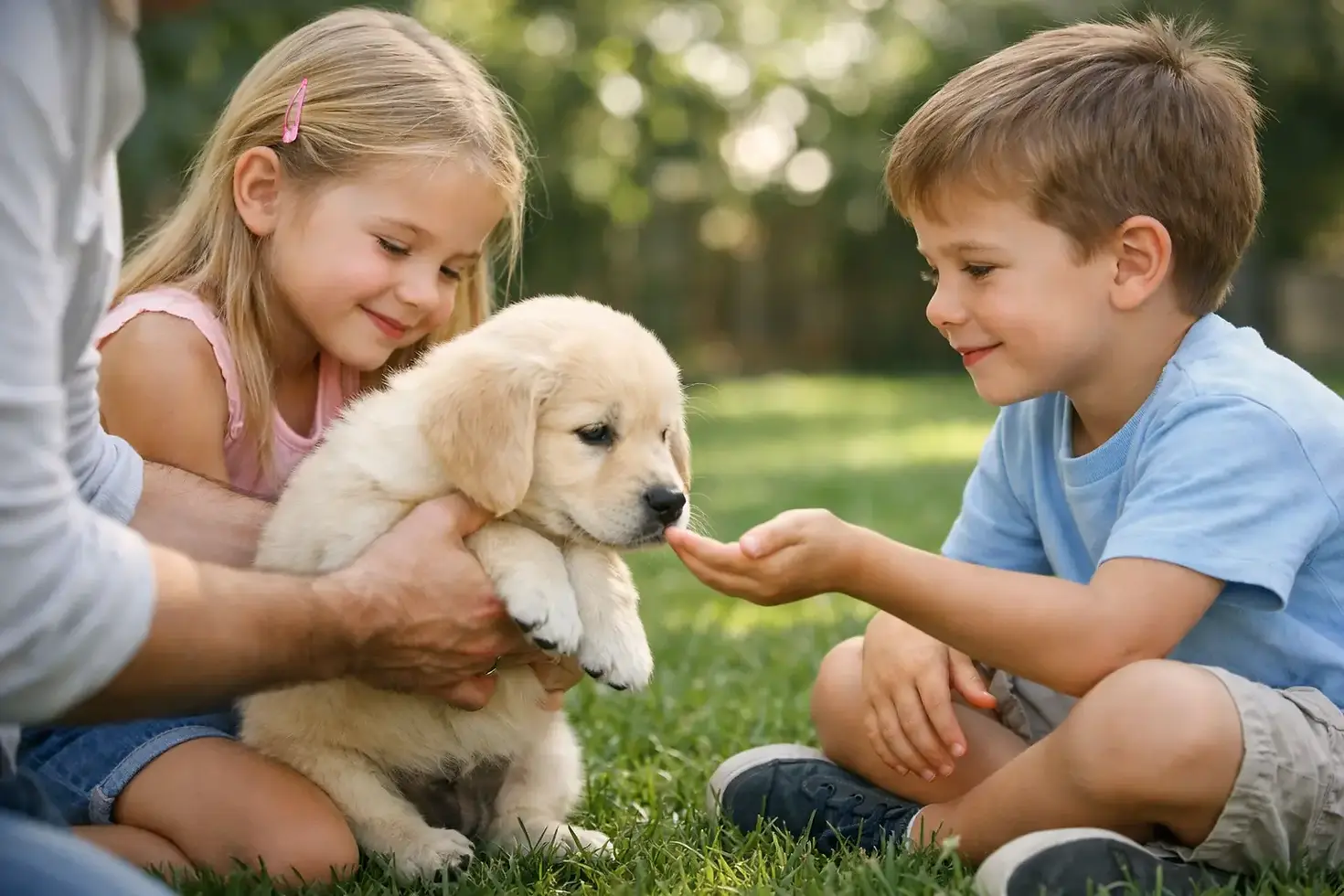
How to Introduce Puppy to Children Safely

The first five minutes matter more than most families expect. If the kids are squealing, the puppy is overwhelmed, and everyone is trying to cuddle at once, even a sweet-natured pup can get nervous fast. When families ask how to introduce puppy to children, the goal is not a cute photo first. The goal is a calm, confident beginning that sets the tone for years of trust.
That matters even more with young children, because puppies and kids are both still learning. Puppies explore with their mouths, bounce when excited, and get tired quickly. Children often move fast, hug tightly, and miss the early signs that a puppy needs space. A successful introduction is really about helping both sides feel safe.
How to introduce puppy to children the right way
Start before the puppy ever comes through the door. Children need simple expectations they can actually remember. Instead of giving a long speech, tell them three things: use quiet voices, let the puppy come to you, and keep hands gentle. Younger kids do better with short phrases like, "Sit still," or "Pet the back, not the face."
Set up the room first. Choose a calm area with enough space for the puppy to move away if needed. Put away loud toys, turn down the TV, and avoid having multiple visitors over on the same day. The puppy is already adjusting to a new home, new smells, and new people. A low-key setting helps tremendously.
When the puppy comes in, resist the urge to create a big family welcome. Let the puppy sniff around on leash while one adult stays fully in charge. The children should stay seated at first. This gives the puppy a chance to observe without feeling surrounded. Many puppies are curious and will approach on their own once the room feels predictable.
That first approach should be brief. If the puppy comes to a child, the child can offer a loose hand to sniff and then gently pet the shoulder or back one or two times. No grabbing, no hugging, no leaning over the puppy's head. Then pause. A good introduction feels almost boring, and that is exactly why it works.
Read the puppy, not just the plan
Some puppies walk right in and act like they have lived there forever. Others need a little more time. Temperament, age, previous handling, and the energy of the home all play a part. A family-friendly puppy still needs room to settle.
Look for signs that the puppy is comfortable. A loose body, curious sniffing, relaxed ears, soft eyes, and willingness to approach again are all good signs. On the other hand, hiding, backing away, yawning repeatedly, lip licking, freezing, or nipping at hands can mean the puppy is stressed or overstimulated.
If that happens, it does not mean the puppy is not good with children. It usually means the moment is moving too fast. Step back, give the puppy space, and try again later. This is where many families get off track. They assume more exposure right away will fix it. In reality, calmer and shorter interactions usually build confidence faster.
Teach children how to interact with a puppy
Children do not automatically know what feels gentle to a dog. They need to be shown, then reminded, then shown again. That is normal. The best rule is to teach kids to invite interaction instead of forcing it.
Show them how to sit on the floor or a low chair without crowding the puppy. Teach them to pet the puppy's back, chest, or shoulder with slow strokes. Face, ears, paws, and tail should usually be off-limits early on unless an adult is guiding the interaction. Many puppies tolerate too much handling at first and then start avoiding kids later. Respectful touch from day one creates a better long-term relationship.
It also helps to explain puppy behavior in child-friendly terms. If the puppy jumps, say, "He is excited, not mean." If the puppy nips, say, "She is a baby and still learning where her mouth goes." That kind of language keeps kids from getting scared while still making it clear that adults are teaching the rules.
Supervision is the real safety plan. Not checking in from across the kitchen. Not listening from the next room. Direct, active supervision. Even the best puppy and sweetest child can make a poor decision in a split second.
Keep early interactions short and positive
One mistake families make is expecting the puppy to spend the whole day with the kids. Puppies need rest, and overtired puppies are much more likely to get mouthy, wild, or overwhelmed. Short, happy interactions are better than long, chaotic ones.
Aim for a few minutes at a time, especially on day one. Let the children meet the puppy, then give the puppy a break in a crate, playpen, or quiet area. This does two good things. It protects the puppy from overstimulation, and it teaches children that the puppy is not a toy available on demand.
This is especially important for households with toddlers. Toddlers are lovable, but they are unpredictable. They fall, shout, grab, and chase without meaning harm. In those homes, management matters just as much as training. Baby gates, puppy pens, and clear adult-led routines are not extra. They are what make a peaceful adjustment possible.
How to introduce puppy to children of different ages
Age changes the plan. Preschoolers need the most structure. Keep them seated, keep interactions brief, and guide every touch. School-age children can usually learn simple puppy rules quickly and may be able to help with gentle routines like tossing a toy or offering a treat with an open palm.
Older kids often want a deeper bond right away, which can be wonderful if they understand consistency. They can help with short training sessions, supervised walks, and practicing calm greetings. The trade-off is that older children may get overconfident and assume a puppy enjoys everything. Remind them that even a social puppy needs breaks.
If your child is nervous around dogs, do not force closeness. Let them watch first. Let them help fill the water bowl or toss treats from a little distance. Confidence usually grows when the child feels in control and the puppy is not being pushed into their space either.
Build trust through simple routines
The best family relationships with dogs are not built in one introduction. They are built in the small daily moments that follow. Predictable routines help both children and puppies know what to expect.
Have children participate in easy, positive tasks with adult help. They can help with name recognition, sit practice, toy play, or calm cuddle time when the puppy is sleepy. Structured involvement builds a bond while reinforcing that the puppy responds to gentle leadership, not chaos.
This is one reason early foundations matter so much. Puppies that have been handled daily, exposed to household routines, and started with basic crate and potty patterns often transition into family life more smoothly. At Doodles4Love, our puppies are raised with early neurological stimulation, daily handling, and age-appropriate social experiences, which gives families a strong head start when bringing a puppy home to children.
Still, no breeder can replace consistency in the home. A well-started puppy benefits most when the family keeps the same calm, clear approach.
Common mistakes families should avoid
The biggest mistake is rushing. A close second is letting children treat the puppy like a stuffed animal. Puppies are living, learning companions, and they need space, sleep, and structure.
Another common issue is correcting the puppy without looking at what led to the behavior. If a puppy nips after ten minutes of noisy play, the answer may be rest, not more stimulation. If a puppy hides from a child, the answer may be slowing down, not insisting they "make friends" immediately.
It is also worth avoiding rough games early on. Tug and fetch can be great later when taught well, but chaotic chasing games with children often encourage jumping and mouthing. At the beginning, calm interaction creates better habits.
What a good introduction really looks like
A good introduction is not dramatic. The puppy enters, sniffs, pauses, and begins to relax. The children stay calm, listen well, and get a short chance to say hello. Then everyone takes a break before doing it again.
That may feel less exciting than the picture-perfect version families imagine, but it leads to something much better. It helps the puppy learn that children are safe and predictable. It helps the children learn how to love a dog in a way the dog can trust.
If you give that relationship time, protect the puppy's need for rest, and teach children what respectful handling looks like, the bond usually comes naturally. The sweetest family dogs are not made by one big moment. They are shaped by gentle beginnings and steady care after the welcome home excitement fades.


Comments