

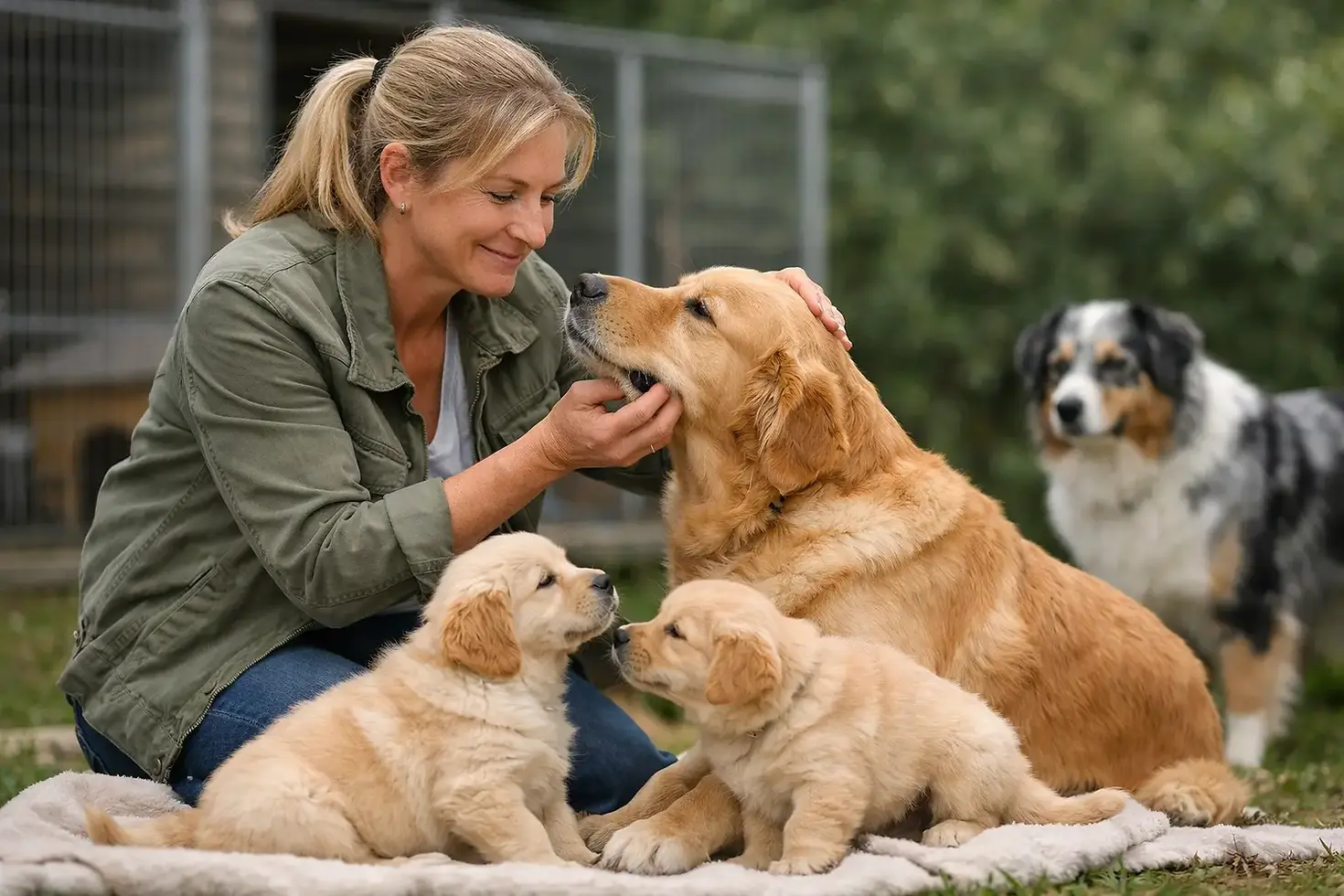
10 Top Signs of Responsible Breeders

Bringing home a puppy should feel exciting, not like a guessing game. When families start searching for the top signs of responsible breeders, they are usually trying to avoid one heartbreaking outcome - falling in love with a puppy before they have real proof that puppy was raised with care, health, and family life in mind.
That concern is valid. A cute face can hide poor breeding practices, weak early socialization, and expensive health problems that show up later. A responsible breeder does more than produce puppies. They shape the first weeks of a dog’s life in ways that affect temperament, confidence, trainability, and long-term health.
Why the top signs of responsible breeders matter
The breeder you choose influences far more than your pickup day. Early handling, the parents’ health, the home environment, and the breeder’s standards all play a role in how smoothly your puppy transitions into family life.
For many buyers, especially families with children, allergy-conscious homes, and first-time doodle owners, that early foundation matters just as much as coat type or size. A well-raised puppy often adjusts faster, handles new experiences better, and has a more stable start. That does not guarantee perfection, because every puppy is still an individual, but it does stack the odds in your favor.
1. They health test their parent dogs
One of the clearest signs of a responsible breeder is that they can explain the health background of the parents without getting vague or defensive. This should go beyond saying the parents are "healthy" or "have never had problems." Good breeders know what conditions matter for their breed or mix and test accordingly.
For doodle families, this is especially important because buyers often assume mixed breeds automatically avoid inherited issues. Sometimes that helps, sometimes it does not. A careful breeder understands that genetics still matter and screens parent dogs before breeding, not after problems appear.
2. They raise puppies as companions, not inventory
Responsible breeders do not act like online resellers moving product. They know each puppy, talk about personality, and can help match the right puppy to the right home.
That is a big difference for families wanting a dog that fits everyday life. A breeder who spends daily time with the litter can often tell you which puppy is more easygoing, more playful, more people-focused, or more independent. Those early observations are valuable, especially if you have young kids, work from home, or want a puppy with a calmer temperament.
3. They start early socialization and enrichment
A puppy’s first weeks matter more than many buyers realize. Responsible breeders handle puppies daily and expose them to normal household life in age-appropriate ways. That may include sounds, surfaces, gentle human interaction, and structured sensory experiences.
This is where there can be a real difference between a puppy raised with intention and one raised with minimal engagement. Good socialization does not mean overstimulating puppies or throwing them into chaos. It means helping them build confidence step by step.
For companion breeds and doodles, this matters because most families want a dog that can settle into indoor living, adapt to routines, and feel secure around people. Early neurological stimulation and thoughtful enrichment can support that transition.
4. They are transparent about where and how puppies are raised
If a breeder avoids showing where puppies live, that is worth taking seriously. Responsible breeders are comfortable sharing photos, videos, updates, and details about the puppies' environment. In many cases, they are also open to video calls or direct communication so buyers can feel informed before making a decision.
Transparency builds trust because it replaces vague promises with visible proof. Clean spaces, healthy-looking puppies, relaxed interactions, and clear routines all tell you something. No breeder’s setup has to look perfect or flashy. It does need to look safe, clean, and centered on the puppies' well-being.
5. They provide veterinary care and clear records
A quality breeder keeps puppies current on age-appropriate care and can show documentation. That usually includes vaccinations, deworming, wellness checks, and identification details if microchipping is included.
This may sound basic, but it matters. Responsible breeders do not leave new owners scrambling to figure out what has or has not been done. They send puppies home with a clear medical starting point.
That kind of preparation helps families feel more confident, especially first-time puppy buyers. It also makes your first vet visit smoother because you are not piecing together incomplete information.
6. They offer a health guarantee and stand behind their puppies
A written health guarantee is another strong sign that a breeder takes responsibility seriously. It shows they are not disappearing once payment clears.
Now, not all guarantees are equal. Some sound good but are so limited they offer little real protection. A responsible breeder should be able to explain what their guarantee covers, how long it lasts, and what support is available if concerns come up.
This is one area where buyers should slow down and read carefully. A guarantee does not remove all risk, because no living animal comes with absolute certainty, but it does show whether the breeder is willing to stand behind their program.
7. They begin basic training foundations
The top signs of responsible breeders often show up in the small details that make life easier once your puppy comes home. One of those details is whether the breeder starts early routines like crate exposure, potty habits, and structured handling.
That early work can make a real difference. It does not mean your puppy will come home fully trained, and honest breeders will not pretend otherwise. But puppies who have already been introduced to routines often adjust faster than puppies with no foundation at all.
For busy families, that head start matters. It can reduce stress during the first few weeks and help create a smoother transition from breeder to home.
8. They communicate clearly and consistently
Good breeders do not vanish for days, avoid questions, or pressure you without giving real information. They communicate in a way that feels direct, reassuring, and organized.
That includes answering practical questions about timeline, pickup, deposits, temperament, feeding, and next steps. It also includes setting expectations. A responsible breeder will not promise that every puppy is allergy-proof, perfectly calm, or identical in size and coat. They explain what is typical, what varies, and where there are no guarantees.
Clear communication is often a preview of the support you will receive after your puppy goes home.
9. They care about matching, not just selling
A responsible breeder wants the placement to work for both the puppy and the family. That means they ask questions too. They may want to know about your home, schedule, children, past dog experience, and what kind of temperament you are hoping for.
Some buyers worry this feels intrusive, but it is usually a good sign. Thoughtful matching protects the puppies and helps families choose with more confidence. Not every adorable puppy is the right fit for every household, and an experienced breeder should be willing to say that.
At Doodles4Love, this kind of hands-on guidance is part of helping families feel supported from first questions to puppy selection.
10. They have real proof of trust
Reviews, repeat buyers, referrals, and happy updates from past families all matter. They are not the only factor, but they help confirm whether a breeder’s promises line up with real experiences.
Look for patterns in what people say. Do families mention healthy puppies, strong communication, smooth transitions, and breeder support? Or do the reviews focus only on how cute the puppies are? Cute is easy. Consistent trust is harder to earn.
Social proof is most useful when it supports what the breeder is already showing you through their process. It should confirm the experience, not replace real standards.
A few red flags to keep in mind
Sometimes the easiest way to spot quality is to notice what feels off. Be cautious if a breeder refuses to discuss health testing, cannot tell you much about the parents, offers little detail about early care, or pushes for fast payment without giving you confidence in the process.
Also be careful with breeders who promise too much. No ethical breeder can guarantee a puppy will never shed, never trigger allergies, or never develop health issues. Responsible breeding is about doing everything possible to give puppies a strong start, not making unrealistic claims.
Choosing with confidence
Finding the right breeder is not about finding someone who says all the right things. It is about finding someone whose process shows care at every stage - before breeding, during puppy raising, and after a puppy goes home.
When you know the top signs of responsible breeders, you can ask better questions, compare programs more clearly, and feel more at peace with your decision. And when a breeder combines health-tested parents, early enrichment, honest communication, training foundations, and real family support, that is often where beautiful puppies become wonderful companions.


Comments