

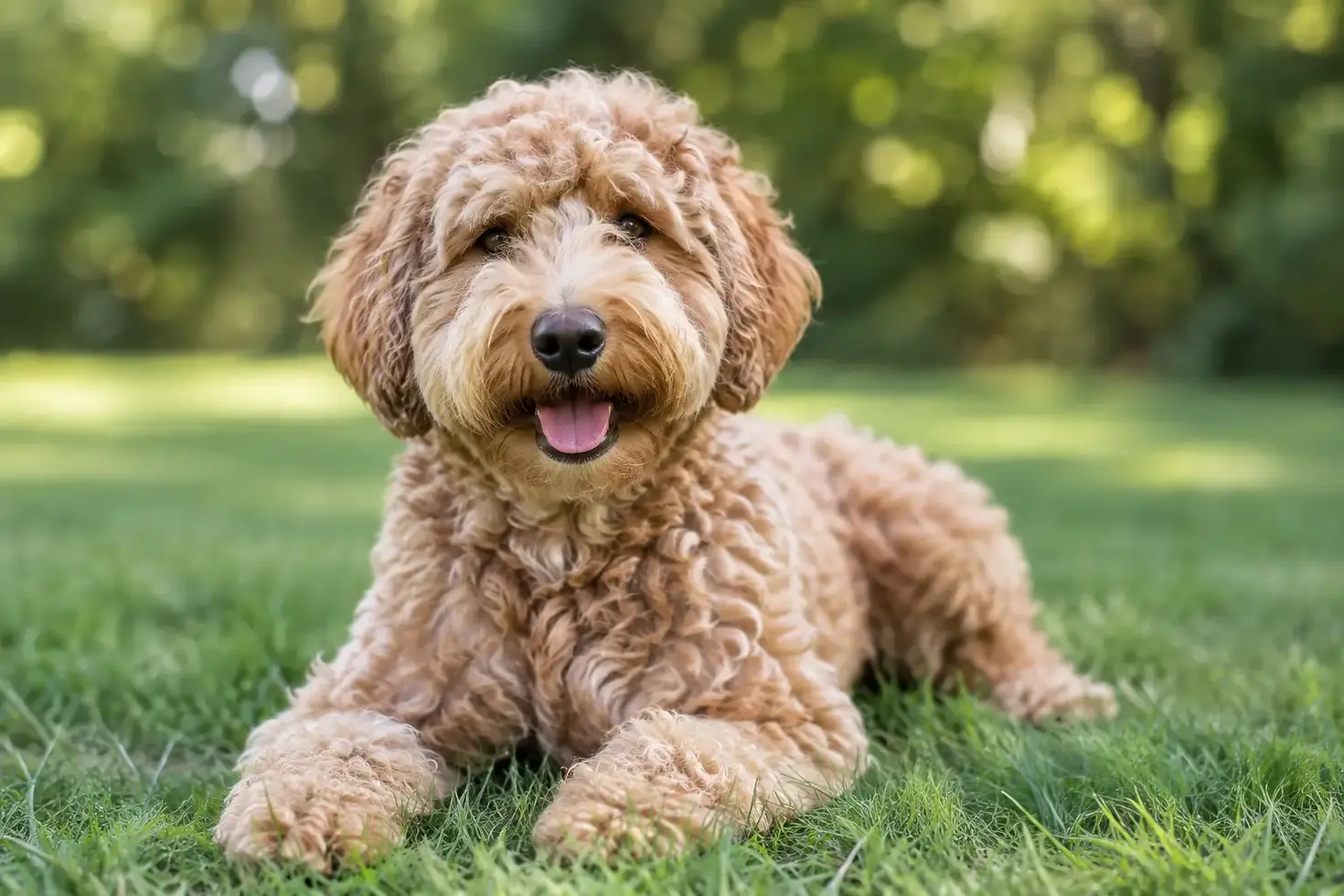
Does an F1b Coat Stay Curly Through Adulthood?

That soft, curly teddy bear coat is one of the biggest reasons families fall in love with an F1b Bernedoodle puppy. But when you are choosing a puppy, it is natural to wonder: does F1b coat stay curly after the puppy fluff fades? In many cases, yes. F1b Bernedoodles are more likely than first-generation Bernedoodles to keep a curly or wavy, low-shedding coat into adulthood. Still, every puppy is an individual, and genetics have the final say.
Does an F1b Coat Stay Curly as the Dog Grows?
An F1b Bernedoodle is typically the result of breeding an F1 Bernedoodle back to a Poodle. That means the puppy has a higher percentage of Poodle genetics than an F1 Bernedoodle. Since Poodles are known for their curly, hair-like coats, this pairing often produces puppies with more curl, more furnishings around the face, and lower shedding potential.
Many F1b puppies keep a curly coat throughout life, although the curl pattern can change. A puppy with loose waves at 10 weeks may develop tighter curls as its adult coat comes in. Another puppy may keep a soft, plush wave rather than forming classic Poodle curls. Both coat types can be beautiful, family-friendly, and low shedding.
The most honest answer is that an F1b coat is likely to stay curly or become curlier, but no responsible breeder can promise the exact adult texture of every individual puppy. Coat genetics are more complicated than one parent breed or one generation label.
Why F1b Bernedoodles Tend to Have Curlier Coats
The “b” in F1b means backcross. In the case of an F1b Mini Bernedoodle, an F1 Bernedoodle is bred with a Mini Poodle. This adds more Poodle influence to the litter, which is why many families looking for a low-shedding companion are especially drawn to F1b puppies.
Poodle genetics can influence several coat traits, including curl, density, shedding level, and the soft facial furnishings that create that beloved teddy bear look. An F1b puppy may have a fleece coat with gentle waves, a curly wool-type coat, or a texture somewhere in between.
Curlier coats often shed less because loose hair is more likely to stay caught in the curls instead of landing on furniture and clothing. That is helpful for tidy homes and may be a better fit for some allergy-conscious families. However, low shedding does not mean no grooming. In fact, a curlier coat needs more consistent brushing because trapped hair can form mats close to the skin.
When Does an F1b Puppy’s Adult Coat Come In?
Most puppies start to lose their soft baby coat between about 6 and 12 months of age. This stage is commonly called the coat transition. Your puppy’s adult hair begins growing in while the finer puppy fur is still present, creating a mix of textures that tangles easily.
For many F1b Bernedoodles, the adult coat becomes easier to read between 12 and 18 months. Some dogs continue to mature in coat texture until they are closer to 2 years old. During this period, a puppy who looked wavy may become noticeably curlier. Others may settle into a loose, shaggy fleece texture.
The transition phase is where families are most likely to see matting. It can feel surprising because a puppy who needed only quick brushing at 4 months may suddenly tangle behind the ears, under the collar, in the armpits, and around the legs. Regular grooming during this stage protects both the coat and your dog’s comfort.
Clues That a Puppy May Have a Curlier Adult Coat
There is no crystal ball for adult coat prediction, but experienced breeders look at several signs. Puppies with visible curls or waves at a young age, thicker furnishings around the face, and a dense coat over the body often have a good chance of developing curlier adult hair.
Looking at the parents is helpful, too. A curly-coated Poodle parent and a curly or wavy F1 Bernedoodle parent can give you a better idea of what may be possible in the litter. Even so, littermates can vary. One puppy may have tighter curls, while another has a softer wave, despite sharing the same parents.
At Doodles4Love, we are always happy to talk through the coat traits we see in each available puppy. Families should feel comfortable asking for current photos, videos, and an honest conversation about the puppy’s texture before choosing their new companion.
Curly, Wavy, and Straight: What Is the Difference?
F1b Bernedoodles are often described as having curly, wavy, or fleece coats. These descriptions can be useful, but they are not guarantees of shedding level or allergy compatibility.
A curly coat usually has more defined ringlets or tight waves and often carries the strongest Poodle influence. It can be a wonderful choice for families hoping for a lower-shedding dog, but it will require reliable brushing and professional grooming.
A wavy fleece coat has a soft, flowing texture that many families love. It may be easier to brush than tight curls, though it can still mat if maintenance is skipped. Some wavy F1b coats are also very low shedding.
A straighter coat is less common in F1b Bernedoodles than in some other doodle generations, but it can happen. It may show more Bernese Mountain Dog influence and can shed more than a curlier coat. If minimizing shedding is a top priority for your household, tell your breeder before you reserve a puppy.
How to Keep an F1b Curly Coat Healthy and Comfortable
A beautiful curly coat is not difficult to manage when grooming becomes part of your normal family routine. The key is consistency, especially during the transition from puppy coat to adult coat.
Brush your F1b Bernedoodle at least a few times each week. Dogs with tighter curls, longer coats, or active outdoor lifestyles may need brushing more often. Work all the way down to the skin instead of brushing only the top layer. If a comb cannot move through the hair easily, there may be a tangle underneath.
Pay extra attention to friction areas: behind the ears, beneath harnesses and collars, under the front legs, around the tail, and between the back legs. These spots can mat quickly, even on a dog that looks brushed from the outside.
Most curly-coated doodles benefit from professional grooming on a regular schedule, often every 6 to 8 weeks depending on coat length and home care. A shorter trim can make life easier for busy families, while a longer teddy bear style creates that fluffy look but requires more frequent brushing. Neither choice is wrong. The best haircut is the one your family can comfortably maintain.
Are F1b Bernedoodles Hypoallergenic?
No dog is completely hypoallergenic. Allergies are usually triggered by proteins found in dander, saliva, and urine, not simply by the hair a dog sheds. Still, many F1b Bernedoodles are considered a more allergy-friendly option because their curlier coats may release less loose hair and dander into the home.
If someone in your household has significant dog allergies, spend time with dogs before making a final decision whenever possible. Keep in mind that reactions can vary from one individual dog to another. Choosing a curlier, lower-shedding F1b puppy may help, but it should never be treated as a medical guarantee.
Choosing the Right Coat for Your Family
When families ask whether an F1b coat stays curly, they are usually asking a bigger question: will this puppy fit our home, our allergies, and our grooming routine? That is the right question to ask.
A curlier F1b Bernedoodle can be a wonderful match for families who want a low-shedding, affectionate companion and are prepared for brushing and routine grooming. A wavier puppy may be just as lovable and may suit a household that prefers a softer, easier-care texture. What matters most is choosing with clear expectations, not just choosing the fluffiest puppy in one photo.
The right F1b puppy brings more than a pretty coat into your home. With patient care, a grooming plan, and plenty of affection, those soft curls can become part of the everyday joy of welcoming a loyal teddy bear companion into your family.


Comments